

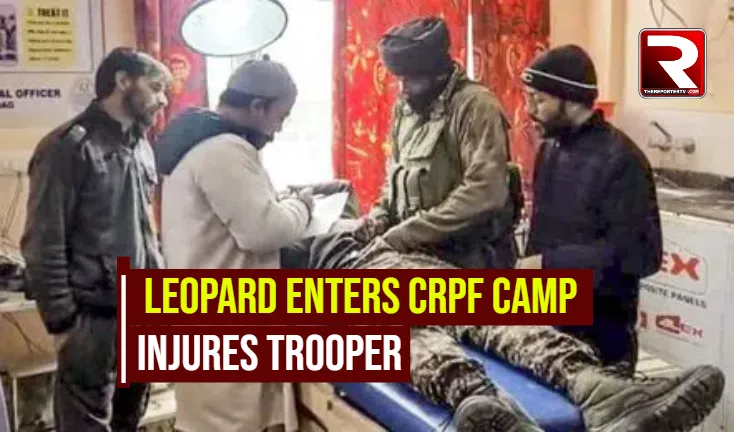
Srinagar : Panic gripped a CRPF camp in Jammu and Kashmir’s Anantnag district on Wednesday after a leopard strayed into the premises and injured a trooper, officials said.
According to authorities, the wild animal entered the Kapran CRPF camp, creating chaos among personnel stationed there. During the incident, Head Constable Kamleshwar Kumar was attacked and sustained injuries.
“He was immediately shifted to a nearby primary health centre, where he was given first aid. His condition is stable, and he has since returned to the camp,” officials confirmed.
Following the incident, field staff from the Wildlife Protection Department were called in to ensure the leopard is safely captured and relocated without harm to either people or the animal.
The latest incident comes amid a rise in human-wildlife conflict in the Kashmir Valley. Recently, a leopard attacked a flock of sheep in a village in north Kashmir’s Sopore area, killing at least seven animals and injuring several others. The incident triggered fear among residents, who urged the Wildlife Department to deploy teams and install cages to capture the animal before further damage occurred. A search operation was subsequently launched to track the leopard.
In another incident earlier this year, an eight-year-old boy was injured in a leopard attack in the Chetragam area of south Kashmir’s Shopian district.
Human-wildlife conflict has seen a sharp increase in the Valley over the past decade, with frequent reports of bears and leopards entering villages, attacking livestock, injuring residents, and occasionally targeting children. Such incidents highlight growing tensions between expanding human settlements and shrinking wildlife habitats.
Experts note that human-wildlife conflict refers to negative interactions between people and wild animals that result in losses to life, livelihoods, and property, while also posing threats to wildlife conservation. The conflict is often driven by competition for natural resources and changes in land use due to population growth.
The consequences of these conflicts include crop damage, loss of livestock, injuries and fatalities, damage to infrastructure, and increased risks of disease transmission between wildlife and domestic animals.
Officials stress that addressing the issue requires coordinated efforts at the national and regional levels, involving departments of forestry, wildlife, agriculture, livestock, and other related sectors to reduce conflict and promote coexistence.